Samegrelo (Mingrelia) · 45 min · Vegan · Sauce & seasoning · For beginners
Megruli Adjika
In German: Mingrelische Adjika · In English: Mingrelian adjika
For 20 servings · US units
Mingrelian adjika: fiery chili paste with garlic, herbs and utskho suneli
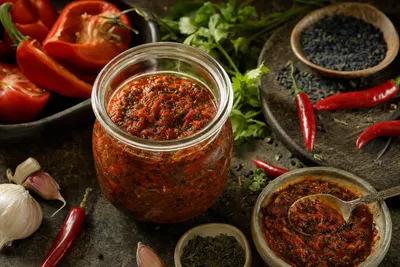
Megruli Adjika is the Mingrelian take on Georgia's hot seasoning paste. Fresh red chilies, plenty of garlic, cilantro and utskho suneli (blue fenugreek) come together into a paste that brings real warmth and smells wonderful while it does. In Georgia it goes on the table as a condiment for all sorts of dishes, and a jar of it in the fridge will see you nicely through autumn and winter.
Ingredients
- 14⅛ ozChili pepperfresh, stems removed, seeds removed fully or partly depending on desired heat
- 25 clovesgarlicpeeled
- 1¾ ozsaltcoarse; preserves the paste
- 1 tbspCorianderground
- 2 tspgroundBlue fenugreek, called utskho suneli in Georgia: dried, ground leaves and seed pods with a mild, hay-like, nutty aroma.Substitute: Dried fenugreek leaves from an Indian grocer come closest but are stronger and more bitter, so use about half the amount; ground fenugreek seed is harsher still and works only very sparingly. Khmeli suneli contains blue fenugreek but also brings coriander, dill and other spices, which changes the character of the dish.Read more
- 1 ozroughly chopped, blended in finelyThe fresh leaves and tender stems of the coriander plant, with a bright, lemony, pungent aroma.Substitute: There is no true substitute: flat-leaf parsley adds freshness and colour but not the distinctive aroma, and dried cilantro has little flavour left. If it is missing, use more of the other fresh herbs, knowing the dish will taste noticeably different.Read more
- ½ ozparsleyroughly chopped
- 1 tspfor colour and aromaGround dried marigold petals, a Georgian spice that turns dishes golden yellow and tastes mild, earthy and slightly bitter.Substitute: There is no equivalent substitute. A small pinch of turmeric matches the colour but brings its own sharper earthy flavour and should be used far more sparingly; dried calendula petals from a pharmacy or tea shop colour more weakly and taste flatter. True saffron is no substitute, its flavour is entirely different.Read more
- 2 tbspVegetable oilstirred in or used to cover the surface in the jar
- ⅓ ozPurple basilThai basil as a substitute (optional)
Method
- Prepping the chiliesPut on gloves, wash the red chili peppers and cut off the stems. Remove the seeds completely or partly, depending on how hot you want it.
- Chopping the garlicPeel the garlic and roughly chop the cloves.
- Making the base pastePass the chilies and garlic through a meat grinder several times, or blitz them together in a blender until you have a fine paste.
- Blending in the herbsAdd the roughly chopped fresh cilantro, the flat-leaf parsley and, if you like, the purple basil, and blend everything in finely.
- Adding spices and saltSprinkle in the ground coriander seed, utskho suneli, ground marigold and coarse salt, then stir hard until the mixture is even and smooth.
- Stirring in the oilStir in part of the sunflower oil, or let it trickle in slowly as you keep stirring; save the rest for covering the jars.
- Draining the pasteTip the paste into a sieve or a clean cloth and let the excess liquid drain off until the adjika is nice and thick.
- Filling the jarsSpoon the paste into clean jars, pressing it down firmly so no air pockets remain, and cover the surface with the rest of the sunflower oil.
- Storing and enjoyingStore the jars in the fridge. You can use the adjika straight away, and it keeps there for months.
Tips and variations
For a milder paste and a bigger batch, blend red bell peppers in with the chilies. Instead of fresh chilies you can use whole dried chilies: simmer them briefly in water and let them soften in it, and keep the seeds in. You can also leave fresh chilies to wilt for 3–4 days somewhere warm and airy first. You can also pound the garlic with the salt in a mortar before anything else, grind toasted walnuts in with the chilies, or use khmeli suneli instead of or alongside the utskho suneli. If you want more herbs, blend dill and thyme in along with the cilantro and parsley, or add savory or dried marjoram. Another version leaves out the fresh herbs entirely and seasons the paste with dried spices alone. For a thicker paste, leave the mixture uncovered at room temperature for 2–3 days, stirring twice a day so the liquid evaporates. Some cooks let it rest in the fridge for at least 24 hours before serving. When you serve it, start with a small spoonful and add more to taste, since a little of this paste goes a long way.
Something not right?
This recipe was put together from independent sources and checked before publishing. Even so, a mistake can slip through — an amount that does not add up, a step that does not work as written. If you spot something, write to us: we will look into it and put it right.