Abkhazia · 40 min · Vegan · Sauce & seasoning · For beginners
Mtsvane Adjika
In German: Grüne Adschika · In English: Green Adjika
For 10 servings · US units
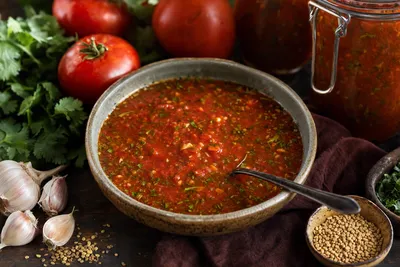
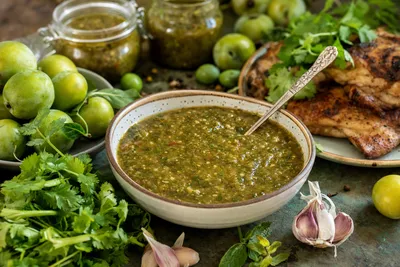
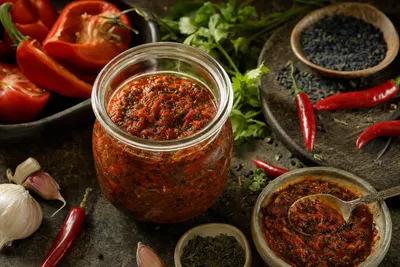
Green adjika, uncooked: chilies, garlic and a mountain of fresh herbs
This green adjika comes from Abkhazia and is never cooked, which is exactly why it tastes so unguarded: all chili, garlic and green herbs, straight up. It's put up as a winter store and kept in jars in the fridge, yet it's ready to eat by the very next day, bringing heat and perfume to just about any plate. How fiery it turns out is entirely up to you, and it all comes down to the seeds.
Ingredients
- 10½ ozhot chili pepperRemove stems; keep seeds for more heat
- 14⅛ ozGreen bell pepperDeseeded, tempers the heat
- 4¼ ozgarlicPeeled
- 7 ozWashed and dried well, stems may be includedThe fresh leaves and tender stems of the coriander plant, with a bright, lemony, pungent aroma.Substitute: There is no true substitute: flat-leaf parsley adds freshness and colour but not the distinctive aroma, and dried cilantro has little flavour left. If it is missing, use more of the other fresh herbs, knowing the dish will taste noticeably different.Read more
- 5¼ ozparsleyRoughly cut
- 5¼ ozdillFinely chopped
- 2¾ ozbasilLeaves only, discard coarse stems
- ⅔ ozmintLeaves only (optional)
- 2 tbspGround, typical Georgian spiceBlue fenugreek, called utskho suneli in Georgia: dried, ground leaves and seed pods with a mild, hay-like, nutty aroma.Substitute: Dried fenugreek leaves from an Indian grocer come closest but are stronger and more bitter, so use about half the amount; ground fenugreek seed is harsher still and works only very sparingly. Khmeli suneli contains blue fenugreek but also brings coriander, dill and other spices, which changes the character of the dish.Read more
- 1 tspCorianderTo taste (optional)
- 2 tbspsaltStir in until dissolved; coarse sea salt works
- 4 tbspwine vinegarFor preserving and seasoning
- 2 tbspsugarBalances acidity and heat (optional)
- 2 tbspvegetable oilNeutral oil or olive oil (optional)
Method
- Wash and dry the produceWash the chilies, bell pepper, garlic and all the herbs, then dry them very thoroughly. The less moisture that goes into the paste, the better it keeps.
- Prepare the chiliesPut on gloves, cut the stems off the chilies and break the pods into rough pieces. Leave the seeds in for a seriously hot adjika, or remove the seeds and white ribs for something milder.
- Prep pepper, garlic and herbsDeseed the bell pepper and cut it into rough chunks, and peel the garlic. Roughly chop the cilantro, parsley and dill, and use only the leaves of the basil and mint, discarding the coarse stems.
- Grind into a pastePass the chilies, bell pepper, garlic and herbs through a meat grinder fitted with the fine plate, alternating as you go, or blitz everything in a blender to an even paste.
- Work in the saltStir in the salt and mix thoroughly until it has completely dissolved.
- Stir in spices and vinegarAdd the ground blue fenugreek (in Georgia it's called utskho-suneli), the coriander, ground, to taste, the wine vinegar and, if you like, the sugar and oil, then stir until the paste is smooth and homogeneous.
- Rest and season to tasteLet the adjika rest briefly, then taste it and adjust the salt, acidity and heat.
- Jar and refrigerateSpoon into completely dry, sterilised jars, seal well and keep in the fridge. It's ready to eat after a day.
Tips and variations
The herb mix is flexible: cilantro with mint and basil, basil with parsley, or equal parts parsley, dill and cilantro all work nicely. A herb-free version uses just green bell pepper, chili and garlic with diluted vinegar essence, salt and sugar. Another version swaps the bell pepper for mustard greens and arugula and blends them with only olive oil, red wine vinegar and salt. Very hot pods can be soaked in warm water for 4 hours before grinding, with the water changed every hour. A splash of oil gives you a smoother paste. One version leaves out the vinegar entirely and preserves the paste with just salt and blue fenugreek. Serve it by the spoonful with grilled vegetables, with beans, or simply spread on fresh bread.
Allergens
Contains: Sulphur dioxide and sulphites
These notes follow from this recipe's ingredient list. Ready-made products and brands may contain further allergens — please check the packaging yourself.
Something not right?
This recipe was put together from independent sources and checked before publishing. Even so, a mistake can slip through — an amount that does not add up, a step that does not work as written. If you spot something, write to us: we will look into it and put it right.