Samegrelo (Mingrelia) · 90 minutes · Vegan · Sauce & seasoning · For confident cooks
Adjika
For 10 servings · US units
Fiery Georgian chili paste with garlic, tomatoes and blue fenugreek
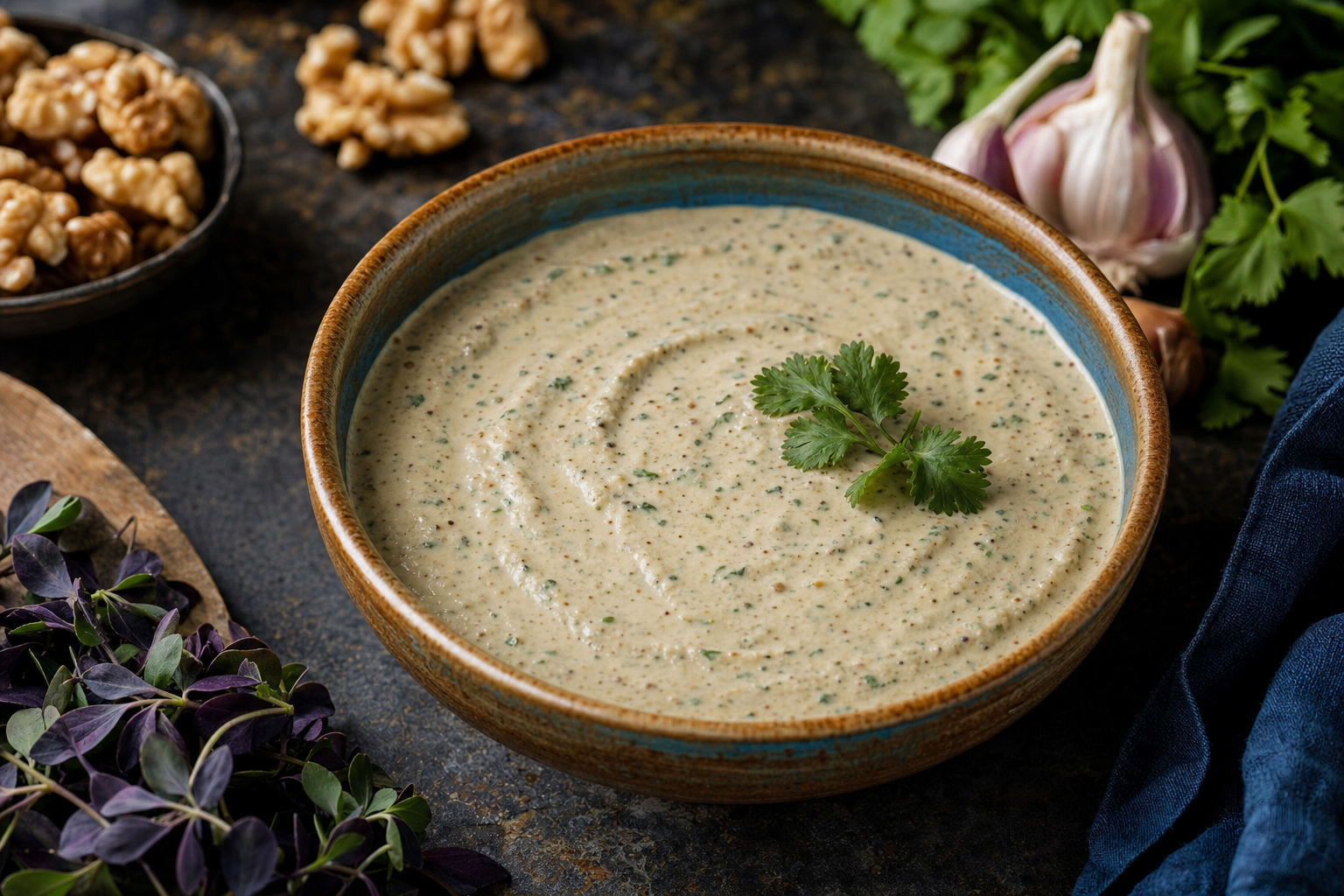
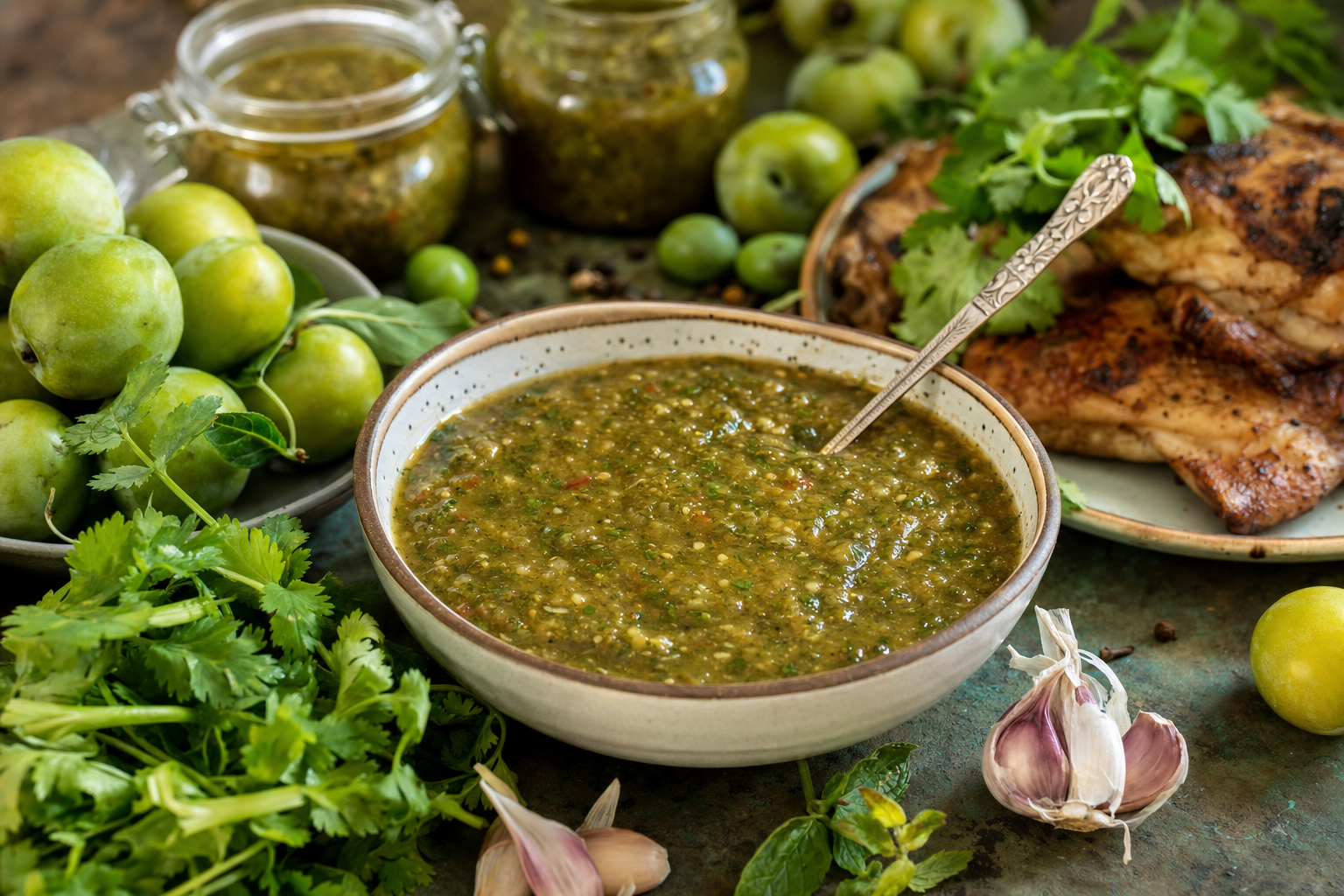
Adjika is the fiery Georgian chili paste that gets served with just about everything — meat, fish, vegetables, and in summer with shashlik straight off the fire. The classic version is built on just three things: fresh chilies, tomatoes and garlic; here they're joined by bell peppers, a big handful of fresh herbs and Georgian spices like blue fenugreek. Salt and chili do the preserving all on their own, so one afternoon's work gives you a jar to dip into for weeks.
Ingredients
- 5¼ ozHot red chili peppersKeep seeds for more heat, otherwise remove; wear gloves
- 15 clovesgarlicpeeled
- 1⅛ lbRed bell pepperseeded, white ribs removed
- 2¼ lbtomatoesmeaty and ripe, usually peeled
- 1⅓ ozsaltcoarse salt; acts as preservative, add gradually to taste
- 1 ozsugarbalances the acidity of the tomatoes
- 2 tbspvinegarapple, wine or table vinegar; for longer shelf life
- 3⅓ tbspvegetable oilsunflower oil; also as a thin layer over the paste in the jar
- 2 tspCorianderseeds crushed or ground, sometimes briefly dry-toasted
- 2 tspblue fenugreek
- 2 tbspkhmeli suneliGeorgian spice blend
- 1 ozcilantroleaves only, stems can taste bitter
- ⅔ ozbasilfresh or dried
- ½ ozparsleyfresh or dried
- ⅔ ozDill (optional)
- 7 ozonionsoftened in oil, not browned (optional)
- 1 tspground marigold (optional)
- black pepperground, to taste (optional)
- Chili flakesto taste for extra heat (optional)
Method
- Wash the vegetables and herbs and pat them thoroughly dry, and peel the garlic. Halve the bell peppers and chilies and cut out the stem ends and the white ribs — keep the seeds if you want real heat, otherwise take them out too. Wear gloves when you handle the chilies.
- If you'd like a more concentrated paste, let the chilies and bell peppers wilt in an airy spot for 2–3 days first, or dry them in the oven at 60–160 °F for 2–3 hours.
- Pour boiling water over the tomatoes, shock them in cold water, slip off the skins and cut out the stem ends.
- If you like, toast the coriander seeds briefly together with the blue fenugreek until fragrant, then crush them in a mortar or have them ready ground.
- Put the chilies, garlic, bell peppers and tomatoes through a meat grinder, or blitz them in a blender or food processor to an even mixture that still has a bit of texture. Work in the cilantro, purple basil, parsley and, if using, the dill at the very end.
- For the cooked version, bring the mixture to a boil and let it reduce uncovered over low heat, stirring now and then, until it is thick and glossy — anywhere from 5 minutes to 1.5 hours depending on how thick you want it. Add the salt, sugar, vinegar, coriander, blue fenugreek, khmeli suneli, vegetable oil and, if you like, ground marigold, black pepper and chili flakes towards the end, then taste and adjust.
- For the raw version, simply stir in salt, sugar, vinegar, coriander, blue fenugreek, khmeli suneli and vegetable oil, plus ground marigold, black pepper and chili flakes if you like, then pour off or drain away the excess juice and let the paste sit for anywhere between 15 minutes and 48 hours.
- Wash and sterilise the jars and lids, fill in the paste without trapping air bubbles, cover with a thin layer of vegetable oil if you like, and seal. Jars filled while hot should also be turned upside down, covered with a cloth and left to cool.
- Store the adjika somewhere cool and dark, or in the fridge. After a few hours to a day of resting the flavour is deeper and the texture is better.
Tips and variations
Adjika thrives on variation: set it up raw with nothing but salt and spices, or cook it down uncovered; leave out the vinegar altogether, or use tomato paste instead of fresh tomatoes. If you want it uncompromisingly hot, skip the tomatoes and bell peppers and make a pure chili-garlic paste; for something milder, soak the chilies in warm water for 4 hours first (changing the water every hour), or cook in onions that have been softened in oil without browning. Parsley root works in place of the fresh herbs. And remember: the more salt, the longer the paste keeps. Serve it in little bowls alongside grilled meat, fish or vegetables — in summer it simply belongs next to shashlik from the fire.
Something not right?
This recipe was put together from independent sources and checked before publishing. Even so, a mistake can slip through — an amount that does not add up, a step that does not work as written. If you spot something, write to us: we will look into it and put it right.