Georgia · 75 min · Vegan · Sauce & seasoning · For beginners
Tkemali
For 10 servings · US units
Georgian sour plum sauce with garlic, cilantro and pennyroyal mint
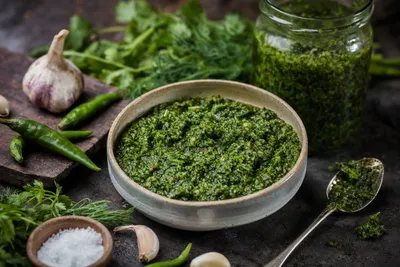
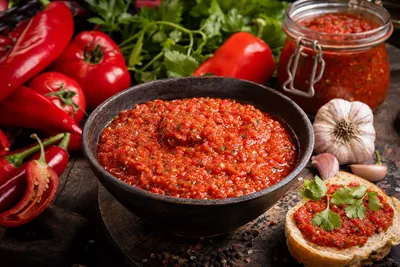
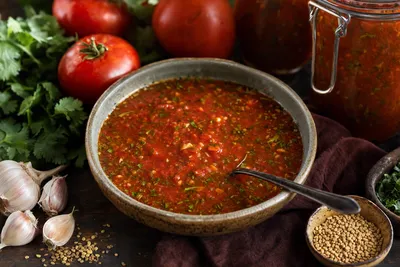
Tkemali is Georgia's everyday sauce — it sits on the table where ketchup sits elsewhere. It takes its name from the sour tkemali plum, used either green or red, and turns into something you want to spoon onto meat and poultry once garlic, fresh cilantro and ombalo (pennyroyal mint) get involved. Serve it hot, warm or cold, and if you cook up a big batch in summer or autumn, you'll have jars to see you through the winter.
Ingredients
- 2¼ lbunripe or sour, cherry plums also workSmall, very tart cherry plums, either green and unripe or ripe in yellow and red, which Georgians cook down into sauce or use as the souring element in stews.Substitute: Unripe, still firm ordinary plums come closest. Ripe plums with lemon juice add acidity, but the fruit is sweeter and softer, and the sauce comes out less fresh and sharp.Read more
- 6 clovesgarlicfinely crushed or blended
- 1¾ ozabout one large bunchThe fresh leaves and tender stems of the coriander plant, with a bright, lemony, pungent aroma.Substitute: There is no true substitute: flat-leaf parsley adds freshness and colour but not the distinctive aroma, and dried cilantro has little flavour left. If it is missing, use more of the other fresh herbs, knowing the dish will taste noticeably different.Read more
- 1Chili pepperground chili works too, heat to taste
- 1 tspCorianderseeds freshly crushed in a mortar
- 1 tspdried or freshly choppedCaution: Use pennyroyal only in small culinary amounts, avoid it during pregnancy and never ingest the essential oil, which is toxic.Ombalo, the Georgian name for pennyroyal: a small-leaved wild mint with a sharp, camphor-like scent, usually used dried.Substitute: Dried peppermint is the usual substitute, also in Georgian households outside Georgia; a pinch of dried thyme brings back some of the pungency. The sharp, camphor-like note of ombalo is lost, and the sauce tastes rounder and fresher but less distinctive.Read more
- ⅔ ozdillfresh; crushed dill seed as substitute
- 1 tspA Georgian blend of dried herbs and ground seeds, chiefly blue fenugreek, coriander and marigold, with a warm, nutty, herbal flavour.Substitute: A rough version can be mixed at home: ground coriander in equal parts with dried dill, summer savory and mint, plus a little ground fenugreek seed or, better, dried fenugreek leaves from an Indian grocer. Ordinary fenugreek is more bitter and sharper than blue fenugreek, so use it sparingly; without marigold the colour and earthy note are missing, and a pinch of turmeric replaces only the colour. The result is recognisably similar but not the same.Read more
- 1½ tbspsugaronly if the fruit is very tart
- 1½ tspsaltadjust to taste
- ½ cupwaterto soften the fruit
- ⅔ ozparsleyin addition to the cilantro (optional)
- 2 tbspvinegarwine or cider vinegar, for preserving only (optional)
Method
- Wash and prepare the plumsWash the sour plums and sort out any spoiled fruit; either halve and pit them or leave them whole — the stones come out later when you pass the fruit through a sieve anyway.
- Simmer the plums until softPut the plums in a heavy-bottomed pot with the water, bring to a boil, then cover and simmer gently until the fruit collapses.
- Reserve the cooking liquidPour off any excess cooking liquid and keep it — you can use it to loosen the sauce later if it reduces too far.
- Pass the fruit through a sievePress the fruit through a sieve to remove stones and skins; if you like, blitz it with an immersion blender first.
- Make the herb pasteFinely chop the garlic, chili pepper, cilantro and dill, or work them into a paste in a blender or mortar; add the parsley if you're using it.
- Season the purée with herbsReturn the purée to the pot, stir in the herb paste and season with ground coriander, khmeli-suneli and mint or ombalo.
- Season and reduce the sauceSeason with salt and, if the fruit is very tart, with the sugar, then reduce over low heat, stirring often, until the sauce is thick.
- Check consistency and adjustCheck the consistency, smooth it once more with the immersion blender if needed and adjust the seasoning; stir in the vinegar if you want it to keep longer.
- Jar and store the sauceLadle the hot sauce into sterilized jars, seal, turn them upside down and let them cool covered; store cool and dark — once opened, the sauce keeps a few weeks in the fridge.
Tips and variations
Instead of sour plums you can use sloes, cherry plums (alycha, briefly cooked and passed through a sieve) or red currants — season the currant version only with coriander, caraway, fresh cilantro and garlic. Tomatoes in equal parts or tart apples can be cooked along with the fruit, pomegranate juice adds extra acidity, and a little oil poured over the sauce in the jar acts as a protective layer. Add cloves, cumin, ucho-suneli or tarragon if you like; for a very herb-heavy, coarse version with basil, onion, barberry, paprika, allspice and Imeretian saffron, simply skip the sieving. You can also purée the raw plums first and cook them afterwards. Let the sauce rest overnight — the flavor rounds out noticeably — and serve it with meat and poultry, hot, warm or cold, and especially with anything off the grill.
Something not right?
This recipe was put together from independent sources and checked before publishing. Even so, a mistake can slip through — an amount that does not add up, a step that does not work as written. If you spot something, write to us: we will look into it and put it right.