Kakheti · 2 h · Vegan · Dessert · For confident cooks
Churchkhela
In German: Tschurtschchela
For 8 servings · US units
Walnuts on a string, dipped in thickened grape juice — Georgia's autumn sweet
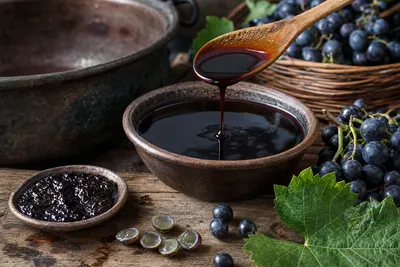
Churchkhela is probably Georgia's best-known sweet: walnut halves are threaded onto a string and dipped again and again into thickened grape juice until they wear a thick, chewy coat. Come autumn, the strands hang from kitchen hooks all over Georgia to dry — no wonder people call them the "Georgian Snickers." Sliced and served with tea or coffee, it's a snack that needs nothing added to it at all.
Ingredients
- 8½ cupsgrape juiceunsweetened, preferably dark and tart
- used instead of or alongside grape juice (optional)Juice pressed from pomegranate seeds, deep red, fruity, tart and slightly astringent.Substitute: The best option is to press fresh pomegranate seeds yourself, which tastes even fresher. At a pinch, pomegranate molasses thinned with water will do, but it brings a darker, caramel-like note.Read more
- 12⅓ ozwalnutswhole halves for threading
- 7 ozhazelnutsreplacing part of the walnuts (optional)
- 12⅓ ozwheat floursifted, for thickening
- 1¾ ozreplacing part of the wheat flour (optional)Finely ground whole maize, yellow or white; not the same as cornstarch, which British English also calls cornflour.Substitute: Fine cornmeal or polenta, ground a little finer in a blender, works well but gives a grainier, more crumbly result. Cornstarch is not a substitute.Read more
- sugaronly if the juice is very sour (optional)
- 1 pinchsalt (optional)
- 835–50 cm eachStrong, undyed cotton thread and a darning or trussing needle, used to string nuts for churchkhela.Substitute: Cotton kitchen twine works just as well; avoid synthetic or dyed thread.Read more
Method
- Prepare the nutsSort through the walnuts and, if you like, toast and skin them; keep the halves as whole as possible so they thread easily. For some of the strands you can use hazelnuts instead.
- Thread the nut strandsCut the strong cotton thread into pieces of 35 to 50 cm, tie a firm knot at the bottom and a loop at the top for hanging. Thread the nuts on with the large needle, leaving enough free space at the top to hang them.
- Heat and skim the juiceHeat the grape juice in a wide pot and carefully skim off the foam as it rises.
- Mix the flour slurryTake off about a third of the juice, let it cool and stir in the sifted wheat flour — part of it corn flour if you like — until completely free of lumps. If you like, add a pinch of salt, plus a little sugar if the juice is very sour.
- Cook the mass until thickPour the flour mixture into the hot juice in a thin stream, stirring constantly, then keep stirring over low heat until the mass is as thick as honey and the raw flour taste has gone.
- Dip and hang the strandsDip the nut strands one at a time fully into the hot mass, let them drip briefly, then hang them over a pole or rack with a tray underneath to catch the drips.
- Repeat the dippingLet the coating set for a short while, then repeat the dipping several times until you have an even, thick layer.
- Dry the strandsHang the strands freely in an airy spot out of direct sun until the surface is no longer sticky but still elastic. Dust any tacky patches lightly with flour and wipe off the excess later.
- Store and serveStore the finished churchkhela wrapped in paper in a cool place; to serve, cut into slices or break into pieces and pass around with tea or coffee.
Tips and variations
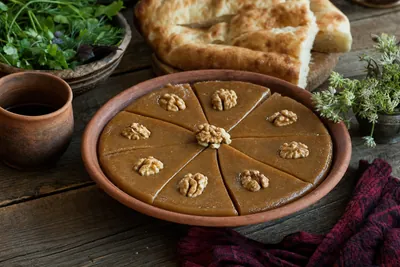
For the juice base, a dark, tart grape juice of the Saperavi type works beautifully. Pomegranate juice can take the place of the grape juice entirely, or you can cook both juices side by side in separate pots and dip some strands in each. With the nuts you can go all walnut, or thread half the strands with walnuts and the other half with hazelnuts. Another version toasts and skins the nuts and breaks them into rough pieces instead of threading raw whole halves. Drying is up to you: the strands are edible once cooled, they get properly good after at least three days, and they reach their full flavour after 10 to 14 days of air drying; you can also finish them off in the oven. Any leftover juice-and-flour mass can be stirred together with chopped nuts and turned out of moulds as pelamushi. Serve the churchkhela cut on the diagonal with a glass of tea or a strong coffee.
Allergens
Contains: Cereals containing gluten, Tree nuts
These notes follow from this recipe's ingredient list. Ready-made products and brands may contain further allergens — please check the packaging yourself.
Something not right?
This recipe was put together from independent sources and checked before publishing. Even so, a mistake can slip through — an amount that does not add up, a step that does not work as written. If you spot something, write to us: we will look into it and put it right.