Kakheti · 180 minutes · Vegan · Pantry staple · For confident cooks
Badagi
For 6 servings · US units
Georgian reduced grape juice — dark, thick and sweet all on its own
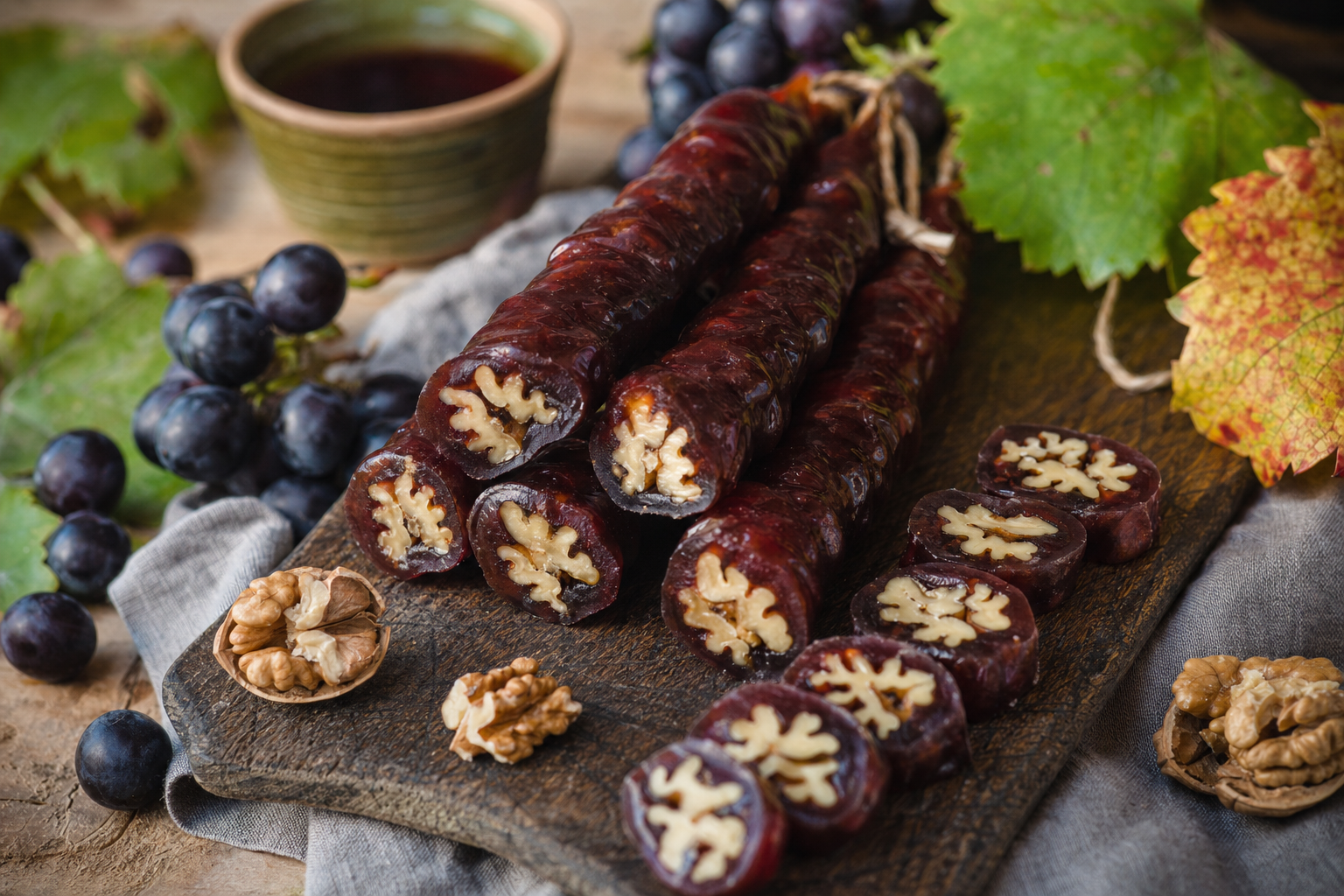
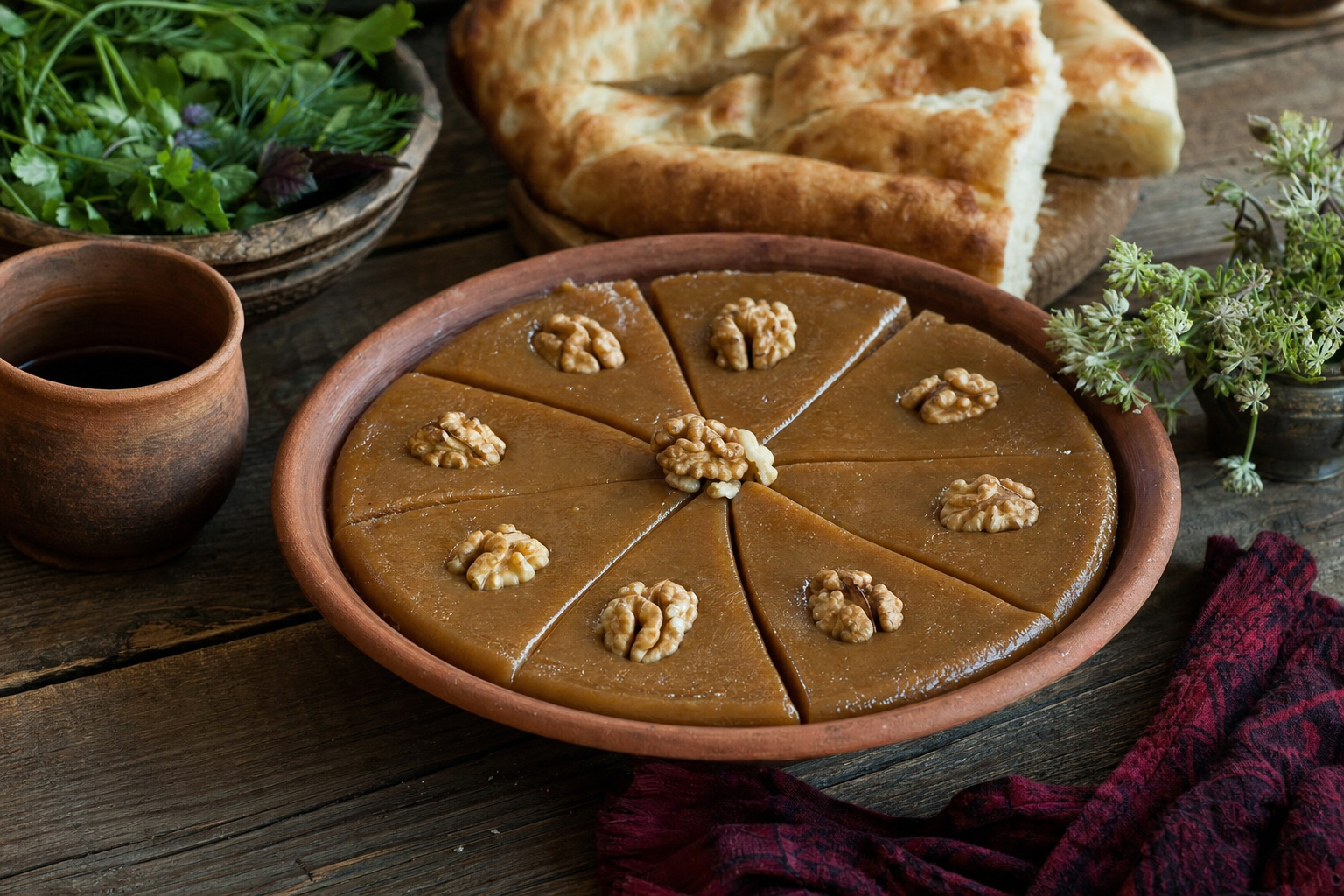
Badagi is the Georgian name for grape juice cooked down to a dark, concentrated syrup — essentially nothing but grapes and patience. It's the base for pelamushi, the Georgian grape pudding, and it's the syrup that strings of walnuts get dipped into every autumn to become churchkhela. Watch the juice darken and thicken over a couple of hours and the long simmer starts to make perfect sense.
Ingredients
- 8½ cupsgrape juicefreshly pressed or unsweetened pure juice, red grapes
- 4¾ lbgrapesalternative to juice: destem, crush and pass through a food mill (optional)
- sugaronly to taste if the grapes are not sweet enough (optional)
Method
- If you're starting from fresh red grapes, pull the berries off the stems, crush them roughly and pass them through a food mill; press the pulp several times so you get as much juice as possible. Otherwise, use unsweetened pure grape juice.
- Pour the juice into a wide, heavy pot and bring it to a boil.
- Skim off the foam that gathers on the surface carefully.
- Turn the heat down to its lowest setting and let the juice simmer uncovered, stirring often so nothing catches on the bottom.
- Reduce for about 1 to 3 hours, until the volume has come down by close to half, the colour has clearly deepened and the flavour tastes concentrated.
- Taste, and stir in a little sugar only if the grapes didn't bring enough sweetness of their own.
- Cover the pot and leave it to stand overnight, then pass the badagi through a fine sieve.
- Let it cool to lukewarm and use it as the base for pelamushi or as a coating for churchkhela — or store it somewhere cool.
Tips and variations
Getting two litres of juice down to roughly one can take anywhere from 1 to 3 hours, and where you land in that range depends on your pot and your flame: a wide pot with plenty of surface and a slightly livelier heat gives off far more steam than a tall, narrow one on the lowest setting. So go by volume, colour and taste rather than by the clock. The overnight rest and the pass through a fine sieve give you clearer, thicker badagi. For pelamushi you thicken it with wheat flour or cornstarch; for churchkhela you dip the strung walnut halves repeatedly to build up layers, and a little saba (grape syrup) and a splash of balsamic add depth when you cook it on. The matte, slightly crystalline film that forms on set badagi comes from the natural grape sugar — it's completely normal and traditional.
Something not right?
This recipe was put together from independent sources and checked before publishing. Even so, a mistake can slip through — an amount that does not add up, a step that does not work as written. If you spot something, write to us: we will look into it and put it right.