Abkhazia · 60 min · Vegan · Sauce & seasoning · For beginners
Apkhazuri Adjika
In German: Abchasische Adschika · In English: Abkhazian adjika
For 20 servings · US units
Fiery Abkhazian paste of red chili, plenty of garlic and fresh green herbs
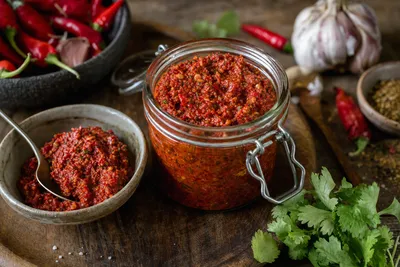
Apkhazuri Adjika comes from Abkhazia: a fiery, boldly salted paste of red chilies, lots of garlic, cilantro, dill and basil, traditionally ground between stones. A spoonful goes alongside meat and fish, it livens up soups and can be stirred into butter. Make it in summer or autumn when the chilies are ripe, and you'll have a jar in the fridge for a long time to come.
Ingredients
- 14⅛ ozChiliFresh; remove stems, halve lengthwise, remove seeds and ribs for less heat; wear gloves
- 20 clovesgarlicPeeled
- 1 ozWashed and patted thoroughly dry, thick stems removedThe fresh leaves and tender stems of the coriander plant, with a bright, lemony, pungent aroma.Substitute: There is no true substitute: flat-leaf parsley adds freshness and colour but not the distinctive aroma, and dried cilantro has little flavour left. If it is missing, use more of the other fresh herbs, knowing the dish will taste noticeably different.Read more
- ½ ozbasilFresh, ideally purple basil; dry well
- ½ ozdillFresh, dried well, tough stems removed
- 2 tbspCorianderToast briefly in a dry pan, cool and grind
- 1 tbspGroundBlue fenugreek, called utskho suneli in Georgia: dried, ground leaves and seed pods with a mild, hay-like, nutty aroma.Substitute: Dried fenugreek leaves from an Indian grocer come closest but are stronger and more bitter, so use about half the amount; ground fenugreek seed is harsher still and works only very sparingly. Khmeli suneli contains blue fenugreek but also brings coriander, dill and other spices, which changes the character of the dish.Read more
- 1⅓ ozsaltCoarse; the paste should be distinctly salty, which preserves it
- ½ ozparsleyWashed and dried well (optional)
- 2 tbspVegetable oilWork in last in a thin stream; a little as a film on top of the paste in the jar (optional)
- 1 tspAdd with the other spices (optional)Ground dried marigold petals, a Georgian spice that turns dishes golden yellow and tastes mild, earthy and slightly bitter.Substitute: There is no equivalent substitute. A small pinch of turmeric matches the colour but brings its own sharper earthy flavour and should be used far more sparingly; dried calendula petals from a pharmacy or tea shop colour more weakly and taste flatter. True saffron is no substitute, its flavour is entirely different.Read more
- 10½ ozbell pepperSeeded, roughly chopped; makes the paste milder (optional)
Method
- Prepare the chiliesWash the chilies, pull off the stems and halve them lengthwise. For a milder paste, scrape out the seeds and ribs, and do wear gloves for this. If you're using bell pepper, seed it and chop it roughly.
- Clean the herbs and garlicWash the cilantro, basil, dill and, if you like, the parsley, pat everything thoroughly dry and remove the tough stems. Peel the garlic.
- Toast and grind the corianderToast the coriander in a dry pan over low heat until fragrant. Let it cool, then grind it finely.
- Grind the basePut the chilies and garlic, plus the bell pepper if using, through a meat grinder, or blitz them very finely in a blender.
- Work in the herbsAdd the herbs and keep grinding until they are finely distributed through the mixture.
- Season and rub to a pasteWork in the salt, the ground coriander, the blue fenugreek and, if you like, the ground marigold, and rub everything into a thick, even paste. If you want, let the sunflower oil run in now in a thin stream and stir it through.
- Drain and tasteTip the paste into a fine sieve and let the excess liquid drain off for 10 to 15 minutes. Then taste: it should be distinctly salty and hot, because the salt and chili are what keep it.
- Jar it and let it mellowSpoon the adjika into clean jars, press out any air pockets with a spoon and, if you like, pour a thin film of sunflower oil over the top. Seal tightly and store somewhere cool. After at least a day the flavors round out nicely.
Tips and variations
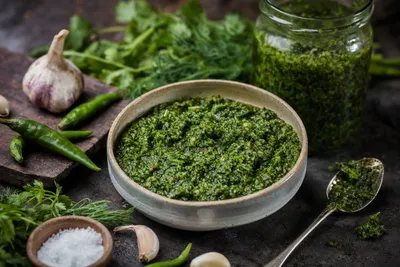
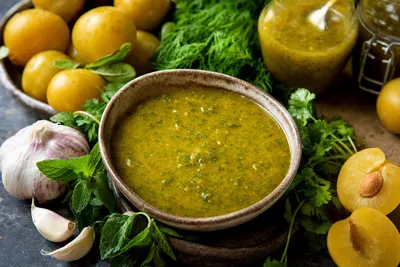
One version adds fresh tomatoes to the paste. A green adjika uses green instead of red hot chilies and gets mint as well. If you'd like it less fierce, soak the chilies in warm water for 3 hours beforehand, changing the water every hour. Ground walnuts give the paste more body, and cumin toasted together with the coriander brings an earthy note. A quick version stirs dried chili flakes together with water and oil and seasons them with savory. To serve, put the adjika on the table with meat or fish, beat it into soft butter, or spread it over chicken or pork before roasting.
Something not right?
This recipe was put together from independent sources and checked before publishing. Even so, a mistake can slip through — an amount that does not add up, a step that does not work as written. If you spot something, write to us: we will look into it and put it right.