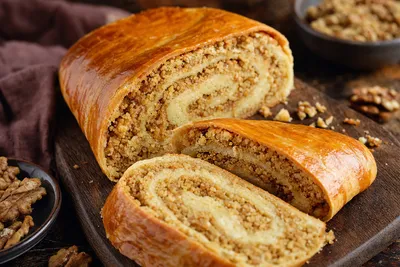
Samegrelo (Mingrelia) · 2,5 h · Vegetarian · Baking · For confident cooks
Megruli Khachapuri
In German: Megrelisches Chatschapuri · In English: Megrelian khachapuri
For 4 servings · US units
Cheese-filled yeast bread with molten sulguni baked on top
Megruli khachapuri comes from Mingrelia, and one small detail sets it apart from its relatives: the cheese doesn't just go inside, it goes on top too, melting into a blistered, golden crust. The dough is soft and stretchy, the filling of sulguni and Imeretian cheese salty and mild at once. Eat it hot, ideally while the next one is still in the oven — it belongs on a weeknight table just as much as at a supra.
Ingredients
- 1⅛ lbwheat flourall-purpose
- 1⅛ cupsmilklukewarm, partly replaceable with water
- waterlukewarm, as part of the liquid (optional)
- ¼ ozYeastor fresh yeast
- ⅓ ozsugarto feed the yeast
- ⅓ ozsalt
- 2⅔ tbspvegetable oilfor dough, bowl and hands
- 1¾ ozbutterin the dough and for brushing the baked breads
- 1⅛ lbcoarsely grated; keep about 150 g for the toppingA Georgian brined cheese made from cow's or buffalo milk, scalded and kneaded like mozzarella, sliceable, salty and mildly sour.Substitute: The usual stand-in is roughly two parts low-moisture mozzarella to one part feta or another brined cheese: the mozzarella provides the melt and stretch, the feta the salt and tang. The blend does not fully match sulguni, being softer and less fibrous, and feta on its own would crumble rather than melt. For smoked sulguni, part of the mix can be replaced with smoked scamorza.Read more
- 8¾ ozsubstitute mild feta with mozzarellaA young Georgian brined cheese made from cow's milk, soft, slightly crumbly and mildly tangy and salty.Substitute: A well-tested mix is roughly two parts mozzarella to one part feta: the mozzarella provides the melt, the feta the salt and tang. The result is stringier and somewhat saltier than the original; for a milder version, replace part of the feta with drained cottage cheese or farmer's cheese.Read more
- 2eggone binds the cheese filling, one for dough or egg wash
- 5¼ ozmakes the dough softer and tangy (optional)Georgian cultured milk, similar to a thin, distinctly tangy plain yogurt.Substitute: Plain whole-milk yogurt, not strained or Greek-style, loosened with a little milk or kefir, comes fairly close in texture and tang. It tastes somewhat milder and rounder; if the fresh sourness is missing, use a larger share of kefir or buttermilk.Read more
- cilantro, finely chopped, in the filling (optional)The fresh leaves of the coriander plant, with a strong, citrusy and pungent aroma.Substitute: There is no real substitute, because its distinctive aroma cannot be reproduced. Flat-leaf parsley adds the fresh green note, but tastes noticeably milder and different.Read more
Method
- Activate the yeastDissolve the yeast and sugar in the lukewarm milk — you can swap part of it for lukewarm water — and let it sit for 5 to 10 minutes, until the surface is foamy.
- Knead the doughMix the flour with the salt, add the yeast mixture, the vegetable oil or soft butter and, if you like, an egg and the matsoni. Knead for 7 to 10 minutes until the dough is soft, supple and barely sticks to your hands.
- Let the dough risePut the dough into an oiled bowl, cover it and let it rise in a warm spot for 1 to 2 hours, until doubled in volume.
- Prepare the cheese fillingCoarsely grate the sulguni and the Imeretian cheese and mix them, setting aside a portion of the sulguni for the topping. Work an egg into the filling, along with finely chopped cilantro if you want it, until the mixture holds together.
- Divide and roll out the doughKnock the risen dough back, divide it into equal pieces and let them rest briefly. Roll out each piece into a circle with a rolling pin, or stretch it with oiled hands.
- Fill and flatten the roundsPile the cheese mixture into the middle, draw the edges up over it and pinch them tightly shut. Turn the parcel seam side down and gently roll or press it out with your palms into a flat round.
- Vent and top with cheeseCut a small hole or a few slits in the top so steam can escape, brush the surface with beaten egg if you like, and scatter over the reserved grated sulguni.
- Bake the breadsBake the breads on a preheated tray or in a hot pan in the oven at 180 to 480 °F for 10 to 20 minutes, until golden brown and the cheese on top is bubbling and molten.
- Butter and serveBrush the hot breads with butter, let them settle for a moment and serve at once — traditionally on a round wooden board with a handle.
Tips and variations
Instead of the oven you can bake the bread in a non-stick pan on both sides, scattering the topping cheese on when you flip it. In the oven, you can also hold that cheese back until a few minutes before the end of baking. For a yeast-free version, make a dough from curd cheese with kefir and baking soda, or from matsoni, curd cheese and oat flour — and if you're in a hurry, shop-bought yeast dough does the job. If you'd rather skip the rolling pin altogether, stretch the dough out with your hands alone, the way it has always been done in Georgian villages. The filling can be made with sulguni only or Imeretian cheese only, with chopped herbs or without. Serve it hot, with matsoni or a hot drink alongside.
Allergens
Contains: Eggs, Cereals containing gluten, Milk (including lactose)
These notes follow from this recipe's ingredient list. Ready-made products and brands may contain further allergens — please check the packaging yourself.
Something not right?
This recipe was put together from independent sources and checked before publishing. Even so, a mistake can slip through — an amount that does not add up, a step that does not work as written. If you spot something, write to us: we will look into it and put it right.