Imereti · 120 minutes · Vegetarian · Baking · For confident cooks
Imeruli Khachapuri
For 4 servings · US units
Soft yeasted bread with a molten cheese centre, buttered straight from the oven
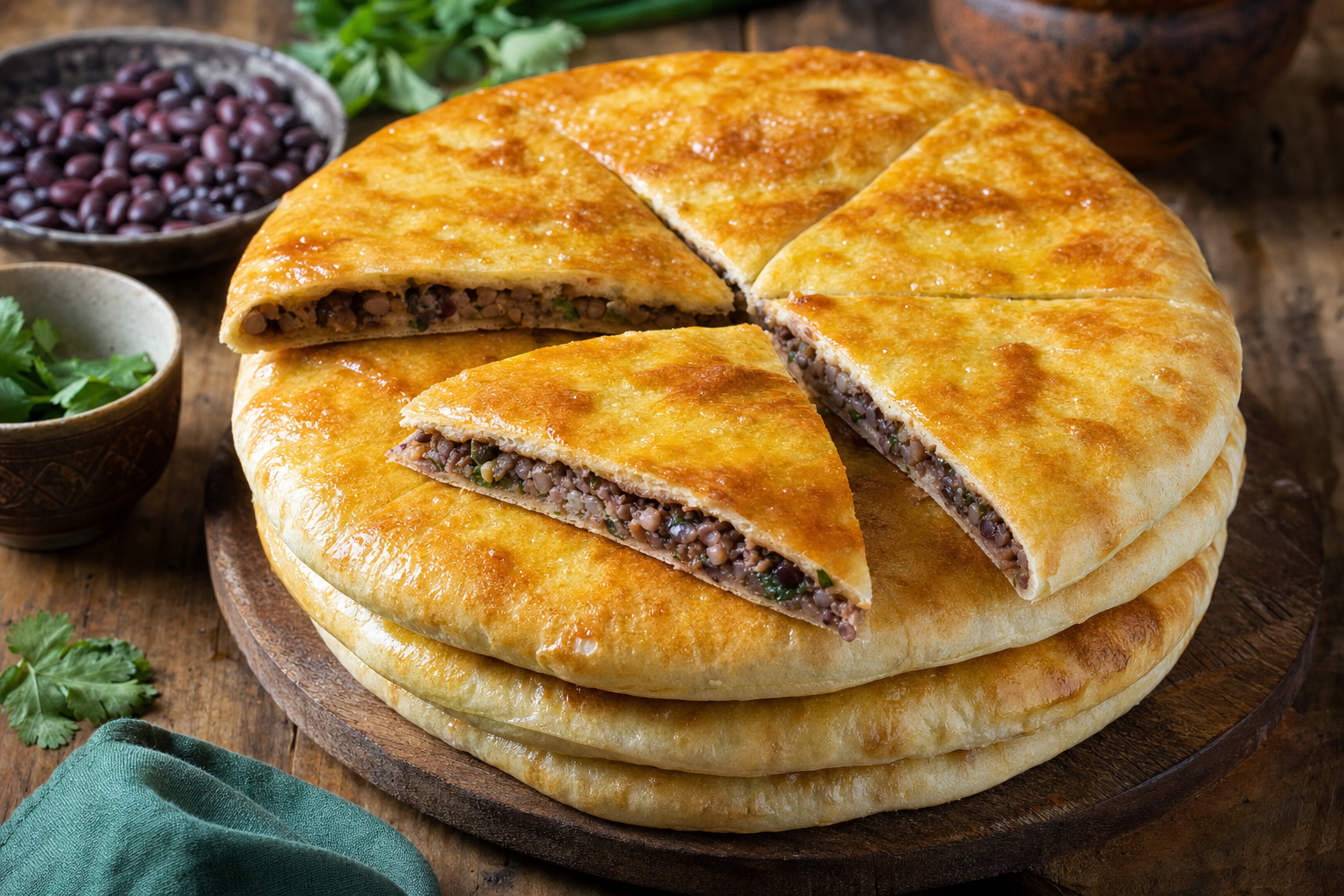
Imeruli khachapuri is Georgia's everyday cheese bread: a round of yeasted dough hiding grated Imeretian cheese and sulguni that melt into a salty, stretchy core. The name comes from the Imeretian way of making it, with fresh Imeretian cheese as the filling. Serve it hot, brushed generously with butter, with sour cream, plain yogurt or ajika alongside — that's all it needs.
Ingredients
- 1⅛ lbwheat flourplus extra for dusting
- 14⅛ ozImeretian cheesecoarsely grated; feta or adyghe cheese as substitute
- 7 ozsulguni cheesecoarsely grated, mixed with imeretian cheese or used alone
- 1 cupmilklukewarm, about 35-40°C
- ¼ ozdry yeastor equivalent fresh yeast
- 2eggone for the dough, one for the cheese filling
- 1¾ ozbutterfor brushing, partly also worked into the filling
- 2 tbspSunflower oilfor the dough and the bowl
- 1 tspsugarto activate the yeast
- 1 tspsaltseason the filling depending on how salty the cheese is
- 1 cupkefironly for the yeast-free pan version, replacing milk and yeast (optional)
- ½ tspbaking sodafor kefir/matsoni dough instead of yeast (optional)
- ⅔ cupmatsoniGeorgian soured milk in the dough (optional)
- 1 bunchcilantrofinely chopped, in the filling (optional)
- black pepperto taste in the filling (optional)
- 1 tbspSour creamin the dough, in the filling or mixed with yolk for glazing (optional)
Method
- Stir the dry yeast into the lukewarm milk (about 35–105 °F) with the sugar and leave it for 10–15 minutes, until the mixture is foamy.
- Mix the flour with the salt, add the yeast milk, one egg and the vegetable oil, and knead for 5–10 minutes into a soft, smooth dough.
- Put the dough in a lightly oiled bowl, cover it and let it rise in a warm spot for 1–2 hours, until it has grown noticeably.
- For the filling, coarsely grate the Imeretian cheese and the sulguni and mix them with the second egg and a little soft butter into a mass that holds together; add salt depending on how salty the cheese is, and stir in chopped cilantro and black pepper if you like.
- Divide the dough and the filling into equal portions and roll each portion of filling into a ball.
- Flatten or thinly roll out each piece of dough, set a ball of cheese in the middle, gather the edges up over it and pinch them firmly shut like a pouch.
- Turn each parcel seam side down and gently press or roll it out into a round about 1–2 cm thick; prick the surface several times or leave a small hole in the centre for the steam.
- Bake the breads on a hot tray in a preheated oven at 200–500 °F for 10–20 minutes, until golden brown.
- Brush them generously with melted butter while still hot, let them rest briefly under a linen cloth so the cheese doesn't run out when you cut them, then slice into pieces.
Tips and variations
You can skip the yeast altogether: a quick dough of kefir and baking soda, cooked in a dry, hot pan under a lid for 3–5 minutes per side. Matsoni or sour cream in place of plain milk gives a softer, slightly sticky dough; in a heavy pan the breads need 8–10 minutes per side over medium heat, and on a grill rack over burnt-down coals 20–25 minutes. Instead of Imeretian cheese, adyghe cheese, brynza, feta or mozzarella all work, and the filling can be stretched with quark or seasoned with cilantro, parsley, dill and pepper. If you like, brush the breads before baking with egg yolk, egg yolk and milk, or egg yolk and sour cream; make minis from 50 g dough and 40 g filling each, or one big bread from the whole batch of dough. Serve hot, with sour cream or plain yogurt — and ajika for heat.
Allergens
Contains: Eggs, Cereals containing gluten, Milk (including lactose)
These notes follow from this recipe's ingredient list. Ready-made products and brands may contain further allergens — please check the packaging yourself.
Something not right?
This recipe was put together from independent sources and checked before publishing. Even so, a mistake can slip through — an amount that does not add up, a step that does not work as written. If you spot something, write to us: we will look into it and put it right.