Georgia · 35 min hands-on · 85 min waiting · Meat · Main course · For beginners
Veal Chakapuli
Original name: Chakapuli (veal) · In German: Chakapuli vom Kalb
For 6 servings · US units
Georgian veal braised with tarragon, white wine and green tkemali
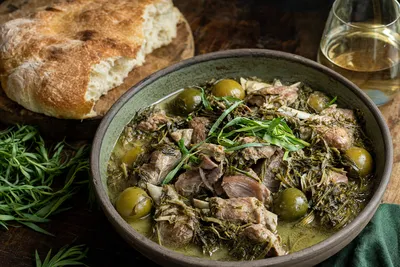
Chakapuli is spring in a pot: veal braised with armfuls of tarragon, cilantro and spring onions, plus young garlic and tart green tkemali (sour cherry plums). You layer everything up, pour in white wine and then let it bubble away quietly. What you end up with is meltingly tender meat in a green, beautifully sour broth that goes straight from the pot to the table.
Ingredients
- 3¾ lbchopped into matchbox-sized piecesMeat from young cattle, pale, tender and mild in flavour.Substitute: Young beef from the shoulder or neck is the obvious substitute, but it tastes stronger, is darker and needs considerably longer to braise; pork shoulder comes closer in tenderness and mildness.Read more
- 5⅔ ozchopped, stems includedA fresh herb with narrow leaves and a distinct anise note, often used by the bunch in Georgian cooking.Substitute: Where tarragon goes in fresh and in quantity, there is no good substitute, since dried tarragon tastes flat and hay-like. Chervil or fennel fronds come closest to the anise note but are milder and less pungent.Read more
- 10½ ozspring onionschopped, white and green parts
- 3½ ozchoppedThe fresh leaves and tender stems of the coriander plant, with a bright, lemony, pungent aroma.Substitute: There is no true substitute: flat-leaf parsley adds freshness and colour but not the distinctive aroma, and dried cilantro has little flavour left. If it is missing, use more of the other fresh herbs, knowing the dish will taste noticeably different.Read more
- 3⅛ ozparsleyroughly chopped (optional)
- 1 cupWhite winefor the braising liquid
- 5¼ ozfresh and pitted, or green tkemali sauce insteadSmall, very tart cherry plums, either green and unripe or ripe in yellow and red, which Georgians cook down into sauce or use as the souring element in stews.Substitute: Unripe, still firm ordinary plums come closest. Ripe plums with lemon juice add acidity, but the fruit is sweeter and softer, and the sauce comes out less fresh and sharp.Read more
- 8 clovesgarlicyoung garlic or garlic scapes if possible, chopped
- 1Chiliseeded and chopped
- 2 tspsprinkled between the layersGround seeds and pods of blue fenugreek, a relative of common fenugreek, with a nutty, hay-like aroma.Substitute: Ground common fenugreek comes closest but is stronger and more bitter, so use only about a third to half the amount, and the dish will still taste sharper and less hay-like. Dried fenugreek leaves capture the herbal side better but not the nutty warmth of the seeds.Read more
- 2 tbspadded together with the wine (optional)A fiery seasoning paste of chilli, garlic, herbs and spices, salty and intense, from Georgia and Abkhazia.Substitute: No ready-made product tastes the same; harissa or sambal oelek supply heat and garlic but bring cumin, acidity or a fermented edge, and they lack the nutty, herbal note of blue fenugreek. The closest result comes from grinding dried red chillies with garlic, salt, ground coriander seed and blue fenugreek, or failing that a little fenugreek seed and dried dill, into a paste.Read more
- 1⅔ cupswaterboiling, roughly enough to cover the meat
- saltto taste
- black pepperground, to taste
Method
- Chop the vealRinse the veal, which you want bone-in here, pat it dry and chop it, bones and all, into matchbox-sized pieces.
- Prep the herbs and seasoningsChop the tarragon with its stems, the cilantro and the spring onions, using both the white and green parts; if you like, roughly chop the parsley too. Seed the chili, chop it finely and mix it into the herbs. Chop the garlic and pit the green tkemali.
- Layer it all in the potIn a heavy pot or kazan, layer the meat, spring onions, the herb and chili mixture, garlic and green tkemali in turns. Scatter a little utskho suneli and salt between each layer.
- Add wine and waterPour in the white wine and, if you're using it, add the green adjika at the same time. Then top up with boiling water until the meat is almost covered, and season everything with salt and pepper.
- Boil and skimSet the pot on the stove and bring it to a boil. Skim off the foam as it rises, then turn the heat down.
- Braise low and slowPut the lid on and let the chakapuli braise over a low flame for 1½ to 2 hours, until the meat is tender and falling off the bone.
- Serve straight awayTake the pot off the heat and serve the chakapuli right away, piping hot.
Tips and variations
Instead of layering, you can build it up step by step: first let the meat sweat in its own juices without any water, then add the water, the white parts of the spring onions, the green parts, the wine, tarragon, green tkemali, cilantro and garlic. A version without tarragon and wine swaps the spring onions for leeks and uses cilantro as the only fresh herb. That version gets its sourness and spice from green tkemali sauce, utskho suneli and ground coriander. It cooks uncovered for 25 minutes first, then gets a little boiling water and finishes braising with the lid on. Another version brings in diced onion, lemon juice, ground red pepper and butter, adds the wine in two batches and stirs in the green tkemali and chili only towards the end – this one works with lamb chops too. If you like it punchier, add green adjika and parsley on top of everything else. Serve the chakapuli in deep bowls with plenty of the broth, straight from the pot.
Allergens
Contains: Sulphur dioxide and sulphites
These notes follow from this recipe's ingredient list. Ready-made products and brands may contain further allergens — please check the packaging yourself.
Something not right?
This recipe was put together from independent sources and checked before publishing. Even so, a mistake can slip through — an amount that does not add up, a step that does not work as written. If you spot something, write to us: we will look into it and put it right.