Georgia · 2 h · Meat · Main course · For beginners
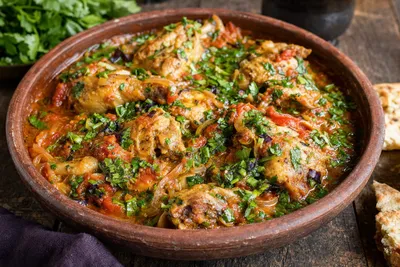
Chashushuli
In German: Tschaschuschuli
For 4 servings · US units
Spicy Georgian beef and tomato stew, finished with a fistful of herbs
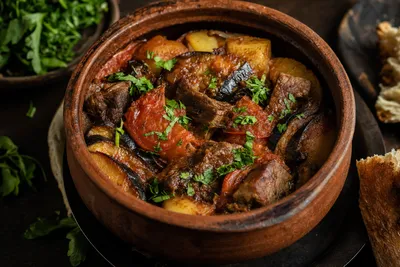
Chashushuli is a spicy Georgian stew of beef and tomatoes, traditionally cooked in a kazan, the heavy Georgian cauldron. Blue fenugreek and Imeretian saffron give the dark, thick sauce its character, and a good handful of fresh herbs and garlic goes in right at the end. Serve it with Georgian lavash — that's all it needs, whether on a weeknight or as part of a supra.
Ingredients
- 1½ lbbeefcut into roughly 3 cm cubes
- 10½ ozoniondiced or sliced
- 14⅛ oztomatoesripe, usually peeled and finely diced
- 2 tbsptomato paste
- 5 clovesgarlicfinely chopped, usually added at the end
- 2hot chili pepperdeseeded, cut into strips
- 2bell peppercut into pieces
- 2 tspBlue fenugreek, called utskho suneli in Georgia: dried, ground leaves and seed pods with a mild, hay-like, nutty aroma.Substitute: Dried fenugreek leaves from an Indian grocer come closest but are stronger and more bitter, so use about half the amount; ground fenugreek seed is harsher still and works only very sparingly. Khmeli suneli contains blue fenugreek but also brings coriander, dill and other spices, which changes the character of the dish.Read more
- 1 tspCoriander
- 1 tspGround dried marigold petals, a Georgian spice that turns dishes golden yellow and tastes mild, earthy and slightly bitter.Substitute: There is no equivalent substitute. A small pinch of turmeric matches the colour but brings its own sharper earthy flavour and should be used far more sparingly; dried calendula petals from a pharmacy or tea shop colour more weakly and taste flatter. True saffron is no substitute, its flavour is entirely different.Read more
- 1 tspA Georgian blend of dried herbs and ground seeds, chiefly blue fenugreek, coriander and marigold, with a warm, nutty, herbal flavour.Substitute: A rough version can be mixed at home: ground coriander in equal parts with dried dill, summer savory and mint, plus a little ground fenugreek seed or, better, dried fenugreek leaves from an Indian grocer. Ordinary fenugreek is more bitter and sharper than blue fenugreek, so use it sparingly; without marigold the colour and earthy note are missing, and a pinch of turmeric replaces only the colour. The result is recognisably similar but not the same.Read more
- 1 tbspA fiery seasoning paste of chilli, garlic, herbs and spices, salty and intense, from Georgia and Abkhazia.Substitute: No ready-made product tastes the same; harissa or sambal oelek supply heat and garlic but bring cumin, acidity or a fermented edge, and they lack the nutty, herbal note of blue fenugreek. The closest result comes from grinding dried red chillies with garlic, salt, ground coriander seed and blue fenugreek, or failing that a little fenugreek seed and dried dill, into a paste.Read more
- ½ tspchili flakes
- black pepperto taste
- 1 tbsplemon juicefor the marinade
- 1 bunchroughly chopped, added at the endThe fresh leaves and tender stems of the coriander plant, with a bright, lemony, pungent aroma.Substitute: There is no true substitute: flat-leaf parsley adds freshness and colour but not the distinctive aroma, and dried cilantro has little flavour left. If it is missing, use more of the other fresh herbs, knowing the dish will taste noticeably different.Read more
- 1 bunchparsleychopped
- 1 bunchbasil (optional)
- 2 tbspvegetable oilsunflower or olive oil
- ⅔ ozbutteradded when braising with the onions (optional)
- 2bay leafremove before serving (optional)
- saltto taste
Method
- Prepare the beefTrim the beef of sinew, cut it into roughly 3 cm cubes and season with salt and pepper. If you like, mix the meat with some of the onion, the lemon juice and the adjika and let it marinate in the fridge.
- Sear the beefHeat the vegetable oil in a kazan or heavy pot and sear the beef in batches over high heat until browned all over.
- Cook the onions until goldenAdd the onions, along with the butter if you're using it, and cook over medium heat until soft and golden, scraping up the browned bits from the bottom of the pot.
- Braise until tenderCover and braise over low heat until the meat turns tender — depending on the beef, a good hour. Add a splash of water only if you need it; the onions and tomatoes usually give off plenty of juice. Tuck in the bay leaves if you like.
- Prep tomatoes and peppersMeanwhile, score the tomatoes with a cross, blanch them briefly, slip off the skins and dice them small. Deseed the chili peppers and the bell peppers, cutting the chilies into strips and the bell peppers into pieces.
- Add vegetables and spicesAdd the tomatoes, bell peppers and tomato paste to the meat, then stir in the blue fenugreek, ground coriander, Imeretian saffron, khmeli suneli and the chili flakes.
- Reduce and season the sauceCover and continue to braise until the sauce is thick and dark, then season to taste with salt and black pepper.
- Stir in herbs and garlicStir in the chili peppers, the garlic and the chopped herbs — cilantro, parsley and basil if you're using it — and take the pot off the heat. Fish out the bay leaves.
- Rest and serveLet it rest, covered, for a few minutes so the flavours settle, then serve with Georgian lavash.
Tips and variations
For especially tender meat, marinate the cubes in lemon juice with onions for 6 to 8 hours beforehand. Cooking without adding any liquid at all gives you a particularly concentrated sauce. There's a quick version too: a pan-fried one with cherry tomatoes, chili sauce and adjika, done in under an hour. Chashushuli is served with Georgian lavash, topped with raw cilantro leaves and rings of red onion.
Allergens
May contain if you use the optional ingredients: Milk (including lactose)
These notes follow from this recipe's ingredient list. Ready-made products and brands may contain further allergens — please check the packaging yourself.
Something not right?
This recipe was put together from independent sources and checked before publishing. Even so, a mistake can slip through — an amount that does not add up, a step that does not work as written. If you spot something, write to us: we will look into it and put it right.