Georgia · 2 h · Vegetarian · Main course · For confident cooks
Kartopiliani Khinkali
In German: Khinkali mit Kartoffeln · In English: Potato khinkali
For 6 servings · US units
Georgian potato dumplings with a knob of butter and plenty of black pepper
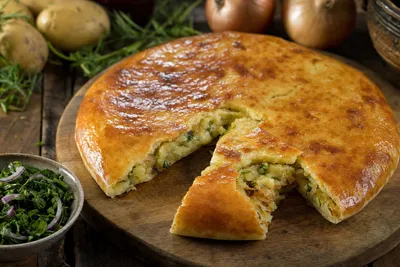
Kartopiliani khinkali are the vegetarian sibling of the classic meat-filled khinkali: thin dough pleated into a little topknot and wrapped around peppery mashed potato, with melting suluguni if you like. They come straight from the pot with a knob of butter, freshly ground pepper and sour cream, and you eat them with your hands, leaving the twisted knot behind. Just the thing for cold autumn and winter evenings.
Ingredients
- 1½ lbwheat flourfor the dough, plus extra for rolling
- 1⅛ cupswaterfor the dough, room temperature
- 1½ tspsaltfor the dough; plus extra for filling and cooking water
- 1¾ lbPotatoeswaxy, peeled, boiled and mashed or grated
- black pepperground, for the filling
- 14⅛ ozcoarsely grated, mixed into the filling (optional)Georgian brined cheese from cow's or buffalo milk, scalded and kneaded like mozzarella but firmer and saltier, with a gently sour note.Substitute: The closest match is a mix of firm low-moisture mozzarella and some feta, roughly two to one: the mozzarella provides the melt and stretch, the feta the salt and tang. The result is softer and milder, and the feta crumbles rather than stretches, so a filling turns slightly grainy; for frying in slices the mix does not work, and halloumi is the better choice there, though it does not melt.Read more
- 1Onionfinely chopped, sautéed in oil until translucent (optional)
- 1spring onionfinely sliced including greens, mixed in raw (optional)
- 1 bunchparsleyfinely chopped, or other fresh herbs (optional)
- ½ tspPaprikato season the filling (optional)
- 2 tbspvegetable oila little for the dough, the rest for frying the onion (optional)
- 1 ozbuttera knob on the hot khinkali (optional)
- Sour creamfor serving (optional)
Method
- For the dough, dissolve the salt in the room-temperature water, then work in the wheat flour a little at a time, adding a splash of vegetable oil if you like. Knead hard for about 10 minutes until you have a firm, smooth dough. Wrap it in cling film and let it rest somewhere cool for at least 30 minutes, though a few hours or overnight is even better.
- Meanwhile, peel the potatoes and boil them in salted water for 20 to 25 minutes until tender. Drain, saving a little of the cooking water. Mash the potatoes, loosening them with a splash of the cooking water if needed, or grate them coarsely instead, then season with salt and black pepper.
- Now finish the filling the way you like it: either fry the finely chopped onion in vegetable oil until translucent and stir it in, or add the spring onion, greens and all, raw. If you like, also mix in chopped parsley, sweet paprika and/or the coarsely grated suluguni. Let the filling cool completely.
- Roll the dough out thinly; if you want, fold it over several times and roll it out again. Then shape it into a log, cut it into slices, dust them with flour and roll each into a circle about 10 to 12 cm across. Alternatively, simply cut circles out of the thinly rolled dough.
- Place about a tablespoon of filling in the centre of each circle. Draw the edge up all the way round in pleats, and the more the better: around 19 to 21 pleats are considered the sign of a well-made khinkali. Pinch firmly at the top and twist into a knot, trimming off any knots that are too long.
- Keep the finished khinkali on a floured surface under a tea towel until you've shaped them all.
- Bring a large pot of salted water to the boil and add the khinkali in batches. Once they float to the surface, let them simmer gently for another 7 to 8 minutes.
- Lift them out with a slotted spoon, top with a knob of butter and freshly ground pepper, and serve with sour cream on the side.
Tips and variations
If you like it cheesy, mix the potatoes and grated suluguni at roughly 2:1. For a fresher filling, use raw spring onion, parsley and paprika instead of fried onion, and coarsely grated rather than mashed potatoes give a looser texture. You can also cook the khinkali right in the potato cooking water. Instead of sour cream, try tomato sauce or Georgian yoghurt alongside, and if you're craving the classic, fill them with beef and pork (or lamb), onion, spices and broth. At the table: hold each one by the knot, bite in carefully and leave the knot on your plate.
Allergens
Contains: Cereals containing gluten
May contain if you use the optional ingredients: Milk (including lactose)
These notes follow from this recipe's ingredient list. Ready-made products and brands may contain further allergens — please check the packaging yourself.
Something not right?
This recipe was put together from independent sources and checked before publishing. Even so, a mistake can slip through — an amount that does not add up, a step that does not work as written. If you spot something, write to us: we will look into it and put it right.